
Sharks Equipped With Sensors Could Help Predict Hurricane Intensity
 - 
 - 
 - 
 - 


 - 


Maritime Medical Examination in Georgia Without a Queue. Special Conditions for Seafarers from Ukraine, Russia and Belarus

25 years of experience, P&I Club certificates, yellow fever vaccination, special offers for seafarers from other countries: transfer service, accommodation search, discounts on certificates in partner training centers, employment assistance through Georgian crewing companies.

TOP European Maritime Training Centers. Part 2: Latvia, Romania, Croatia, Cyprus

"Crewing Guide" has previously covered training centers with branches both in Ukraine and worldwide, and has also focused on maritime training centers in Poland. In this article, we've compiled training centers from Latvia, Romania, Croatia, and Cyprus for you.


How a Seafarer Can Obtain a Liberian Registry Certificate and Complete Verification in 2026

In 2026, the rules for issuing certificates for work on vessels under the Liberian flag were updated.

Where and how to properly obtain maritime certificates, what requirements are currently in force, and how to complete the process without losing time.

Detailed information can be found on the website of AVANT Training Center or by contacting the training department at +38 (067) 300-83-38.

Maritime Training Centers in Europe – Part 3: Germany and the Netherlands

In this material, we will focus on where to obtain or renew maritime certificates in Germany and the Netherlands, and we will also look at which training centers for seafarers prepare specialists to work on smart ships and with artificial intelligence technologies.


Sharks Equipped With Sensors Could Help Predict Hurricane Intensity

13.08.2026
1741
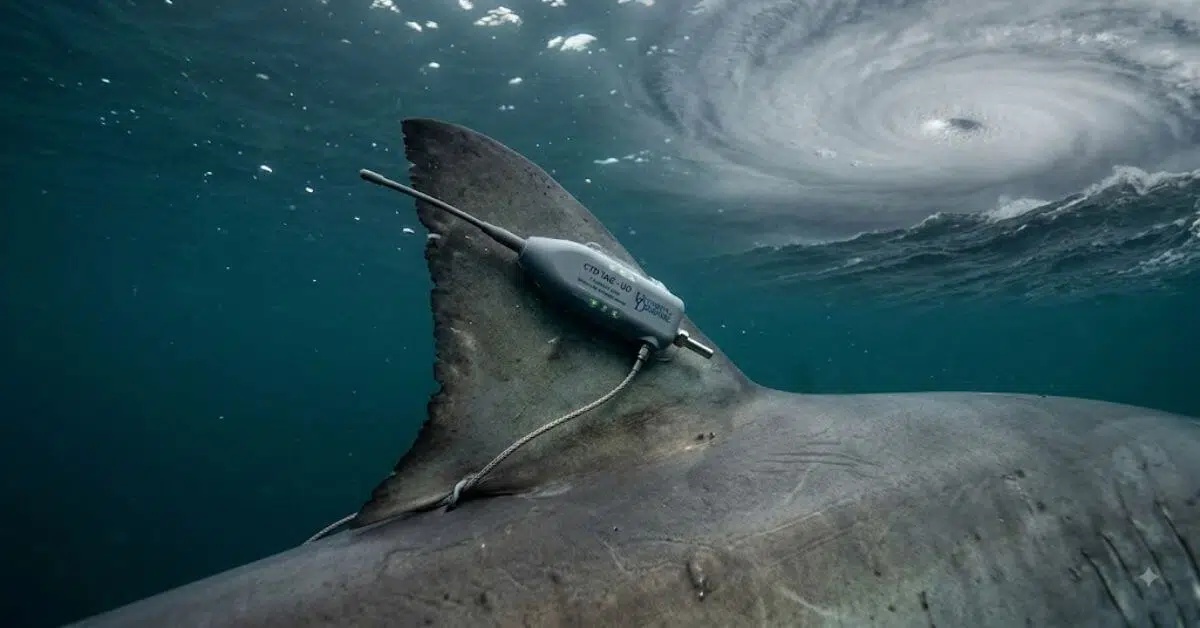
 
Researchers at the University of Delaware are tagging sharks with small devices that measure temperature, depth and electrical conductivity, which is closely linked to salinity.
 
Ocean conditions can affect how strong a hurricane becomes. Researchers are especially interested in the heat stored in the ocean’s upper mixed layer, which provides energy to hurricanes.
 
Sharks naturally move through different depths and parts of the ocean, giving researchers a possible way to collect data in places that are difficult to monitor regularly.
 
The CTD tags attached to the sharks record temperature, depth and conductivity. As the sharks dive and swim, the sensors collect measurements from different depths.
 
The information is transmitted to satellites when the shark’s dorsal fin reaches the surface. The tags can then send the collected data along with the shark’s GPS location to researchers.
 
Scientists  examined 11 shark species to find which ones were most suitable for carrying the sensors.
 
Shortfin makos and blue sharks ranked highest because they surface often enough to give the tags opportunities to connect with satellites.
 
The tagging work takes place about 30 to 40 miles (50 to 65 km) offshore. Researchers travel on a research vessel, put baited lines into the water and usually wait two to three hours for a shark to take the bait.
 
Once a suitable shark is caught, the tag is attached to its dorsal fin. The procedure usually takes less than five minutes.
 
The work is carried out under institutional animal-care oversight. The tags are attached with materials designed to corrode and eventually fall off.
 
Source: Reuters, Maracoos


1
Share:


Confirm
Cancel

Confirm
Cancel


Yes
No