

Norway To Deploy World’s Largest Fleet Of ‘Flying’ Electric Ferries
16.04.2026
285
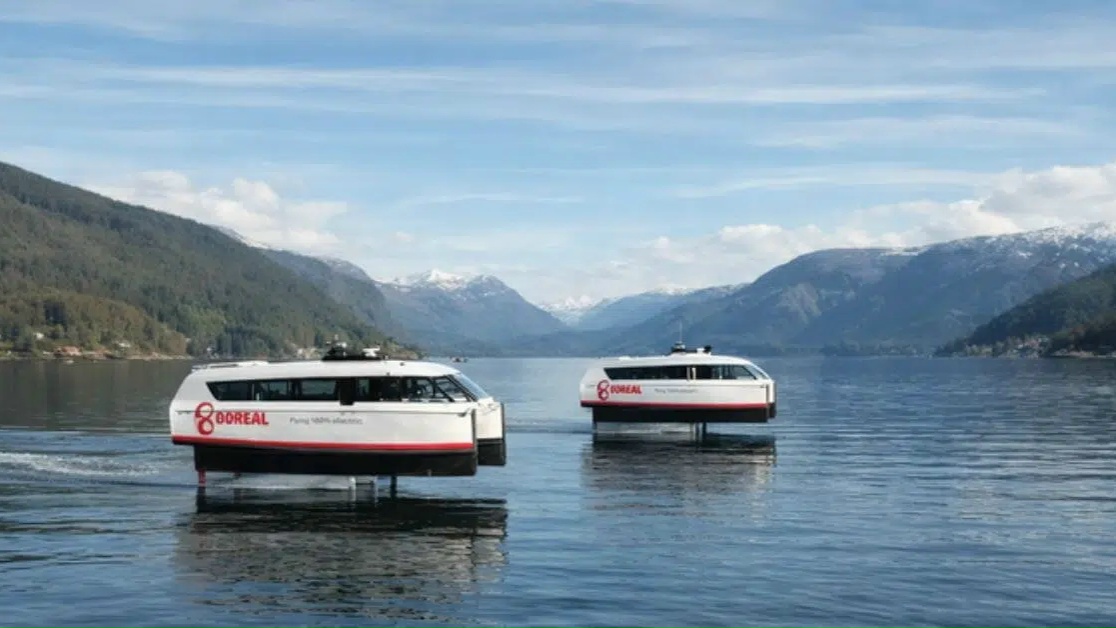
Norwegian operator Boreal AS, a leader in sustainable transport, has ordered 20 Candela P-12 electric hydrofoil vessels from Sweden’s Candela Technology, marking the world’s largest electric fleet to date.
The uniquely fast and silent hydrofoiling vessels will speed up commuting along Norway’s fjord-lined coast, where water travel is an essential part of daily transport.
Norway is already the world’s most electrified car market, with around 99% of new car sales fully electric. Electrifying high-speed passenger vessels – ‘hurtigbåtar’, the backbone of rural transport-has, however, remained challenging, as conventional e-ferries lack the range and speed to replace the diesel-powered fast ferries connecting communities across the country’s deep fjords and more than 100,000 kilometres of coastline.
The Candela P-12, however, solves this: it combines a cruising speed of 25 knots with a range of around 40 nautical miles, enabling electric operation on routes previously only served by diesel vessels. Furthermore, the large fleet of 20 vessels will provide more frequent departures and speed up travel times.
The P-12’s unique performance comes from computer-controlled hydrofoils—wings mounted beneath the hull—that lift the vessel above the water at speeds above 18 knots. By flying above the waves, drag is drastically reduced, and energy consumption drops by around 80 percent compared with conventional vessels of similar size.
Furthermore, the efficient P-12 can fully recharge in an hour using standard DC car fast chargers, avoiding the expensive megawatt-scale charging systems required by conventional electric ferries.
Passengers will also see a major upgrade in comfort. The vessel’s digital Flight controller reads wave conditions using sensors and adjusts the hydrofoils in real time, ensuring a smooth ride even in rough seas while keeping cabin noise extremely low.
Recent tests of the P-12 in Stockholm confirmed cabin noise levels of just 64 dB—lower than modern trains, aircraft, or ferries—making it the quietest high-speed vessel in operation.
Source: marineinsight
Share:


