

Sharks Equipped With Sensors Could Help Predict Hurricane Intensity
13.08.2026
137
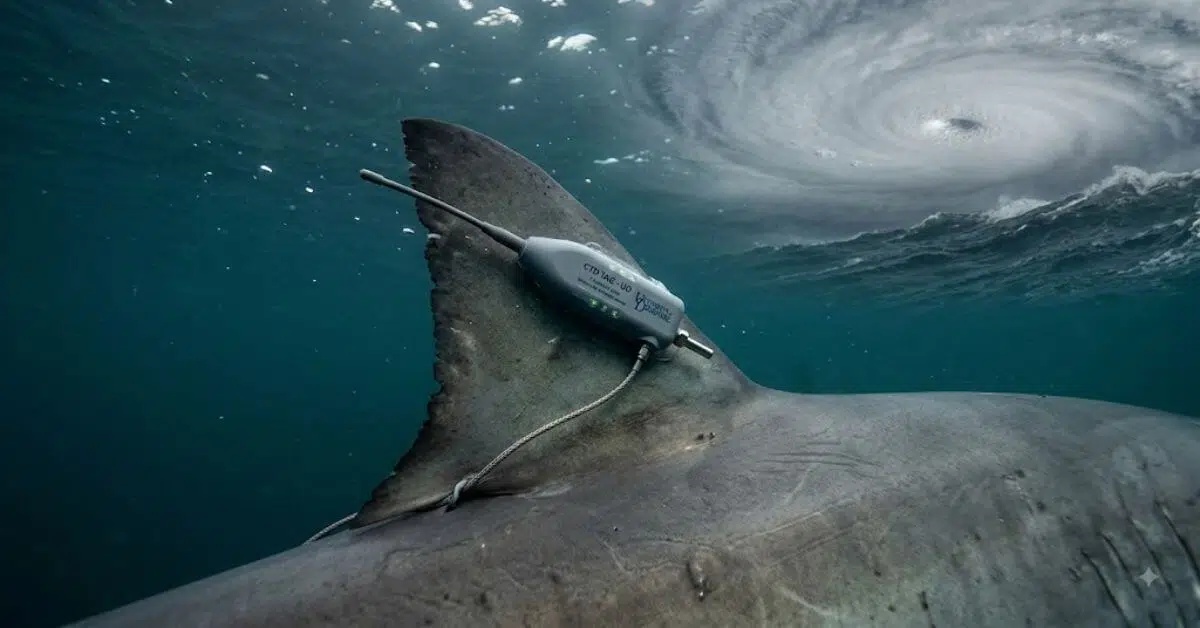
Researchers at the University of Delaware are tagging sharks with small devices that measure temperature, depth and electrical conductivity, which is closely linked to salinity.
Ocean conditions can affect how strong a hurricane becomes. Researchers are especially interested in the heat stored in the ocean’s upper mixed layer, which provides energy to hurricanes.
Sharks naturally move through different depths and parts of the ocean, giving researchers a possible way to collect data in places that are difficult to monitor regularly.
The CTD tags attached to the sharks record temperature, depth and conductivity. As the sharks dive and swim, the sensors collect measurements from different depths.
The information is transmitted to satellites when the shark’s dorsal fin reaches the surface. The tags can then send the collected data along with the shark’s GPS location to researchers.
Scientists examined 11 shark species to find which ones were most suitable for carrying the sensors.
Shortfin makos and blue sharks ranked highest because they surface often enough to give the tags opportunities to connect with satellites.
The tagging work takes place about 30 to 40 miles (50 to 65 km) offshore. Researchers travel on a research vessel, put baited lines into the water and usually wait two to three hours for a shark to take the bait.
Once a suitable shark is caught, the tag is attached to its dorsal fin. The procedure usually takes less than five minutes.
The work is carried out under institutional animal-care oversight. The tags are attached with materials designed to corrode and eventually fall off.
Source: Reuters, Maracoos
Share:


