

Sea, Separation and Sexuality: What Happens to a Seafarer During a Long Voyage.

Two Lives of the Same Person
A seafaring career creates a distinctive rhythm of life. For several months, a person lives within a family; then they move into a completely different environment. Home is replaced by the vessel, partner and children by the crew, family routines by watchkeeping and shipboard duties. When the contract ends, the transition happens in reverse. And this cycle may continue for many years.
Research shows that long voyages, separation from family, confined living conditions, demanding work and insufficient rest can all affect a seafarer’s emotional state. But there is also a broader process at work: a person repeatedly moves from one way of life into another, and each transition requires psychological readjustment.Sexuality is part of that readjustment.
What Happens to a Seafarer’s Sexual Desire?
There is no universal pattern. For some people, the absence of familiar intimacy may intensify sexual desire. For others, fatigue, stress and lack of sleep may reduce it. Over time, sexual fantasies, memories, erotic content or masturbation may remain an important part of a person’s inner life, or they may gradually become less prominent.
Neither response necessarily indicates a problem. The human mind is capable of adapting to circumstances that cannot readily be changed.
Moreover, when someone says, “I miss sex,” sexual desire may not be the only thing they are missing. They may miss touch, embraces, the warmth of home and the simple experience of being physically close to someone they love. A seafarer may spend almost every hour surrounded by other people and still experience loneliness. In this sense, sexuality during a long voyage is also about emotional and physical closeness.
Distance Changes Both Partners
Modern communications allow seafarers to see their families almost every day, talk to their children and remain involved in events at home. This helps to preserve relationships, but it does not remove the distance itself. A seafarer may learn about a problem at home and be unable to help, experience a family conflict and only minutes later report for watch, where complete concentration is required.
For this reason, the quality of communication matters just as much as its frequency. Communication supports intimacy while it remains a way of staying connected; once it becomes a form of constant monitoring, it begins to undermine that closeness.
At the same time, a voyage takes place in two places at once. While the seafarer adapts to life on board, the partner at home learns to live without them: making decisions independently, caring for children, dealing with everyday matters and developing a routine of their own.
Over several months, both partners change.
This is precisely why returning home can sometimes be more difficult than people expect.
Coming Home Is Part of the Voyage Too.
It may seem that once the contract is over, everything should immediately return to the way it was. But the seafarer has spent months living according to one routine, while the family has lived according to another. Each has developed their own habits and ways of organising daily life.
This creates a somewhat paradoxical situation: the seafarer does not return to exactly the same relationship they left, and the partner does not welcome home exactly the same person they said goodbye to.

This does not mean that the relationship has become worse. It simply means that both people may need time to become accustomed to one another again.
This may be especially noticeable in intimate life. During months of separation, both partners may form a strong image of the long-awaited reunion, while reality also includes fatigue, travel, children and accumulated responsibilities at home. For some people, sexual desire returns immediately; others need more time. One partner may want intimacy more than the other.
The difficulty often lies not in the difference itself, but in how it is interpreted: “You don’t want me anymore,” or “There must be someone else.” A normal period of readjustment can then turn into anxiety, jealousy and pressure — all of which can genuinely interfere with intimacy.
After a long separation, therefore, a simple principle can be useful: intimacy is better rebuilt than tested.
What Can Help?
Before a voyage, it can be useful for partners to agree on how they will stay in touch and which matters at home can be handled independently. During the voyage, it is important to maintain communication without allowing it to become a form of control, and not to insist on resolving every conflict immediately.
After returning home, neither partner should expect everything to become “the way it was” overnight. The seafarer may need time to rest and feel at home again, and also to recognise that the family had to manage without them and carry the difficulties of everyday life on their own. The partner at home may, in turn, need time to reintegrate the returning seafarer into a life that has developed its own rhythm and to hand back part of the responsibility and family duties.
The first days at home should not become a test of love or fidelity, including through intimate relations. If emotional distance, persistent conflict, jealousy or sexual difficulties continue for a prolonged period and cause concern to either or both partners, seeking professional support may be worthwhile.
Instead of a Conclusion
The life of a seafaring family follows a recurring path: life together → separation → adapting to life apart → return → learning to live together again.
Behind the question of a seafarer’s sexuality lies a deeper question: how do we preserve closeness with someone who is physically absent for months, and then learn to live closely together again when they return?
Every family finds its own answer. But perhaps one of the defining strengths of a resilient seafaring family lies precisely in this ability — to travel repeatedly from closeness to separation and back again, preserving trust without expecting everything to be restored on the very first day home.
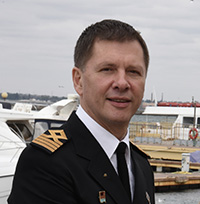
Author of the article: Oleg Tkachenko, Master Mariner, Master’s Degree in Psychology.
Odesa, August 2026.
Other documents:
Job Interviews for Seafarers: Unconventional Questions and How to Answer Them
From STCW to Smart Ships: Where Seafarers Train in Greece – Part 5


