

HD Hyundai Partners With ABS To Develop World’s First Nuclear-Powered 16,000 TEU Container Ship
19.03.2026
330
The project focuses on a 16,000 TEU container vessel powered by a Small Modular Reactor (SMR).
The aim of the project is to evaluate whether Small Modular Reactors can serve as a reliable power source for commercial ships.
The SMR planned for the project can produce up to 100 megawatts of power, which will be used to run an electric propulsion system.
In the proposed design, the reactor will generate electricity to power propulsion motors instead of conventional fuel engines.
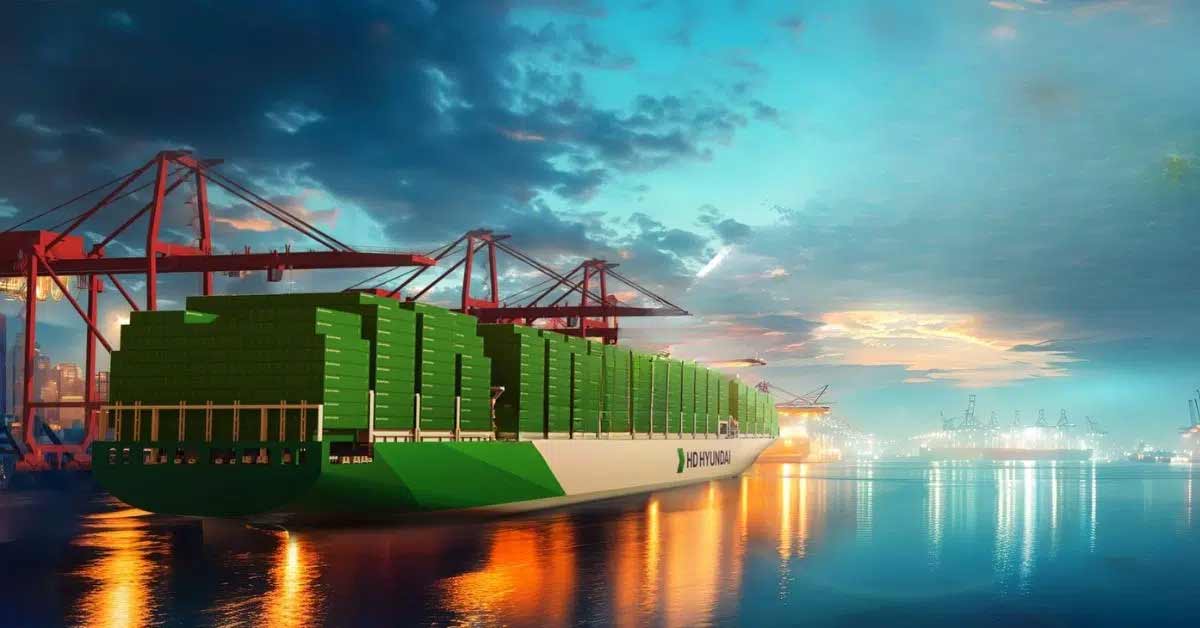
If the concept is successfully developed, the ship could operate without producing carbon emissions, supporting the shipping industry’s efforts to reduce greenhouse gas emissions.
Another advantage of nuclear-powered ships is the removal of large fuel tanks, exhaust systems, and conventional engines, which usually take up significant space inside vessels.
Without this equipment, ships could carry more containers within the same hull size.
The concept vessel being studied by HD Hyundai will have a capacity of 16,000 TEU, equivalent to about 13,000 standard twenty-foot containers.
The design will also include a twin-screw propeller system, which improves thrust and maneuverability.
Engineers are also considering a direct-drive propulsion system, where the motor connects directly to the propeller. This design reduces energy loss during power transmission and improves efficiency.
The proposed vessel could also carry more reefer containers, which transport refrigerated and frozen goods.
Reefer containers require large amounts of electricity to maintain temperature during long voyages. A nuclear-powered electric propulsion system could provide stable power for both propulsion and refrigerated cargo.
Safety remains one of the most important issues in nuclear-powered shipping.
The vessel design will include safety systems that can withstand collisions or flooding.
Source: marineinsight
Share:


