

World’s First Offshore Ocean Heat Energy Platform Installed
04.05.2026
285
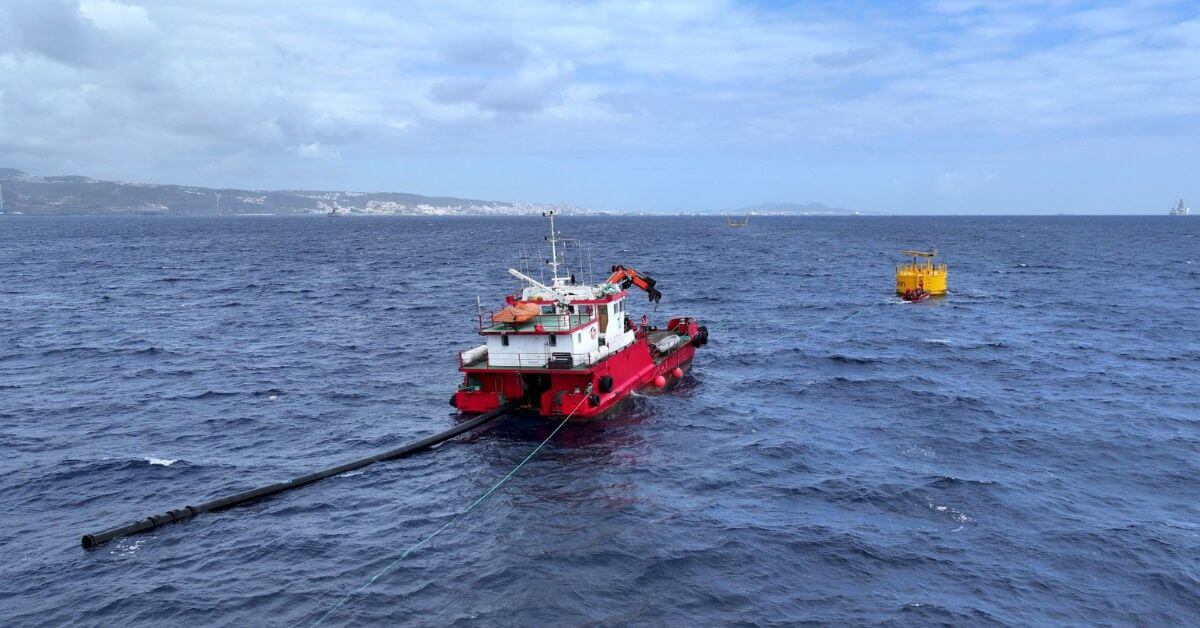
UK-based clean energy company Global OTEC has installed the world’s first purpose-built offshore platform designed to generate electricity using temperature differences in ocean water.
The company said the floating prototype has been deployed at the Oceanic Platform of the Canary Islands (PLOCAN), a marine testing site off the coast of Spain.
It marks the first time a system of this kind has been installed offshore to test continuous power generation from ocean thermal energy.
A key step in the installation was the deployment of a vertical seawater intake riser. This structure is used to bring cold water from deep below the sea surface and is considered one of the most difficult parts of building an offshore Ocean Thermal Energy Conversion (OTEC) system.
The floating setup allows engineers to test how the system performs in real ocean conditions, including how it behaves structurally and how it interacts with the marine environment.
OTEC technology works by using the temperature difference between warm surface water and cold deep-sea water.
Warm water heats a working fluid with a low boiling point, creating vapour that turns a turbine to generate electricity.
Cold water, drawn from depths of up to around 3,280 feet, then cools the vapour back into liquid so the cycle continues.
Many island regions still depend on imported diesel and heavy fuel oil for electricity. This makes power generation vulnerable to fuel price changes and keeps electricity costs high.
Global OTEC said its system could provide another option because it produces electricity continuously, unlike weather-dependent renewables.
Source: interestingengineering
Share:


